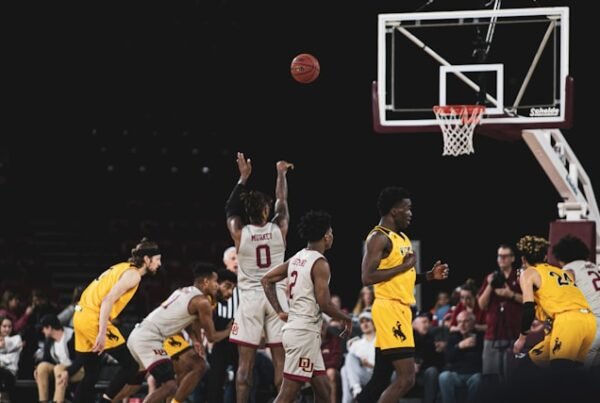
Ask a coach what their team does and you will usually get a system: a primary offence, a defensive coverage, some special situations. Ask what their team does when the first option is taken away, the shot clock reads seven, and the intended action has already failed — and the answers diverge sharply, player to player.
That gap is where games are decided, and no playbook covers it. A coaching philosophy does.
What a philosophy actually is
It is not a motto and it is not values on a wall. It is a small set of decisions, made in advance, that tell players how to choose when the situation is unscripted:
- What do we want the game to look like — tempo, spacing, shot selection?
- Which mistakes are acceptable, and which are not?
- What do we protect when we are losing?
- Who is allowed to take a difficult shot, and when?
A team that can answer those questions consistently will improvise coherently. A team that cannot will improvise five different ways at once, which looks like a lack of talent but is a lack of clarity.
Acceptable and unacceptable mistakes
This is the most practical piece and the most often skipped. Every coach implicitly tolerates some errors and punishes others; few state which. When it is unstated, players infer it from your reactions — and they usually infer that any mistake is dangerous, so they stop making decisions.
Naming it changes behaviour immediately. “An aggressive drive that turns the ball over is fine; a lazy cross-court pass is not” tells a player how to play. Silence on the subject tells them to play safe, and safe teams are easy to defend.
Building one that is actually yours
Start from your players, not from a model
Philosophies copied from elite teams tend to fail because they were built around personnel you do not have. Begin with what your group can already do well and what it will realistically be able to do in a year.
Write it in one page
If it cannot fit on a page, players will not carry it into a game. Length is a sign of unresolved decisions, not thoroughness.
Test it against real moments
Take three difficult situations from last season and check the philosophy answers them. If it does not, it is a description, not a decision-making tool.
Expect to revise it
A philosophy that never changes is either exceptionally well-built or never actually consulted. Revising it after a season is a sign it is in use.
Why this matters more than the system
Systems are borrowed easily and copied by opponents just as easily. What cannot be copied is a group of players who share a clear idea of how the game should be played and can act on it without being told. That is built deliberately, over seasons, by a coach who has decided what they believe — and said it out loud, often enough that it sticks.
Henrik Dettmann explores this in Building game strategy, and Steponas Kairys applies it to attacking structure in Team offense building philosophy — both in the Three Days Online Course at IBU University.